
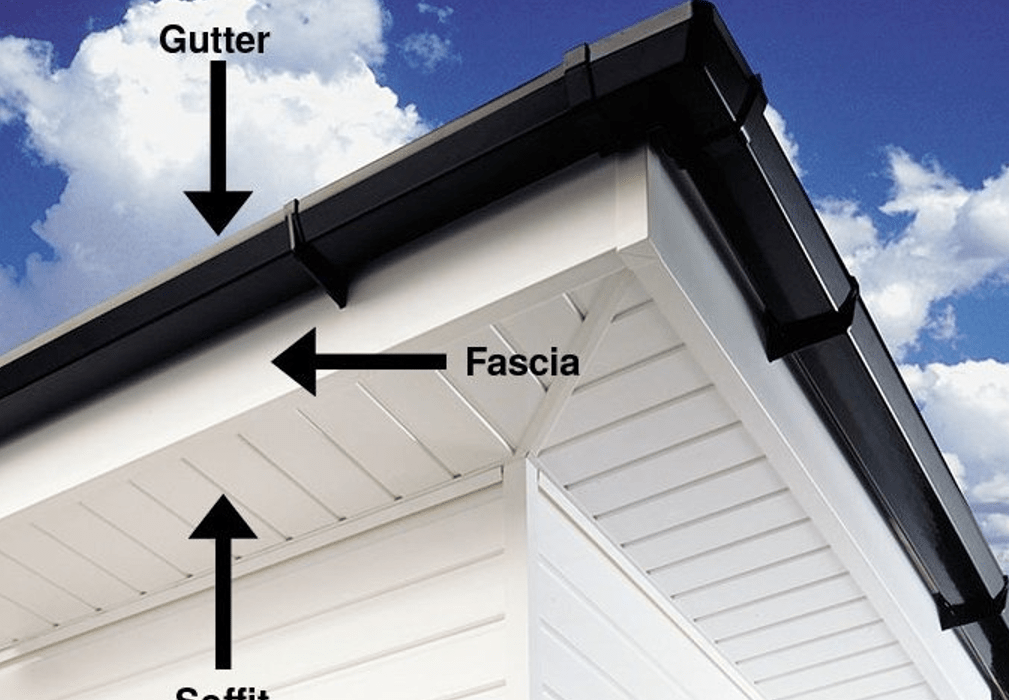
When most homeowners think about roof problems, they’re usually picturing shingles blowing off, leaks in the ceiling, or maybe storm damage that’s obvious from the driveway. But there’s a part of your roofing system that often gets overlooked—your soffit and fascia.
Even though these two components sit quietly at the roof’s edge, they play a massive role in your roofing system, attic ventilation, curb appeal, and the long-term health of your home. Ignoring damage to your soffit and fascia doesn’t just lead to a little rot or peeling paint—it can snowball into expensive repairs involving your attic, insulation, gutters, and even your interior walls.
Let’s break down what soffit and fascia do, why they matter, and what can really happen when they’re not maintained.
What Are Soffit and Fascia, Anyway?
Fascia is the vertical board that runs along the roofline. It’s what your gutters are attached to, and it creates a finished look along the edge of your roof. Think of it as the “front porch” of your roofing system—visible, structural, and important.
Soffit is the horizontal underside of your roof overhang. It often has ventilation panels that allow air to flow into your attic, which is essential for regulating temperature and moisture.
Together, the soffit and fascia protect your home from water, pests, mold, and structural deterioration. They also help your roof function properly by supporting gutters and allowing moisture to escape your attic.
Why Soffit and Fascia Matter More Than You Realize
You may think damaged soffit or fascia is just an eyesore, but these components have critical jobs that impact your entire roofing system:
1. They Protect Your Home From Water Damage
Your fascia holds up your gutters—and gutters are what direct water away from your home. When fascia boards rot, your gutters can pull away, tilt, or sag. Suddenly, instead of water flowing neatly into your downspouts, it’s pouring down the side of your house, soaking your siding, saturating soil around your foundation, and even leaking inside.
Damaged soffits can also allow wind-driven rain to reach your attic, where moisture causes mold, rot, and insulation damage.
2. They Keep Critters Out of Your Attic
If you’ve ever heard scratching in the ceiling, you know how big of a problem tiny openings can cause.
Rodents, squirrels, bats, birds, insects—they all love finding gaps in soffit or fascia where they can wiggle into a warm, cozy attic. Once inside, they chew wiring (creating fire hazards), nest in insulation, leave droppings, and cause thousands of dollars in damage.
Most attic pest infestations start with soffit or fascia failure.
3. They Help Control Attic Ventilation
Your attic needs proper ventilation to stay dry and to prevent heat buildup. The soffit vents work with your ridge vent to create a continuous airflow that keeps your attic temperature regulated.
When soffits get blocked or damaged:
-
Moisture gets trapped
-
Mold begins to grow
-
Insulation becomes damp and ineffective
-
Roofing materials deteriorate from the inside out
In fact, poor attic ventilation is one of the biggest reasons shingles age prematurely.
4. They Maintain the Structural Integrity of Your Roof Edge
Your roof edge is most exposed to wind, rain, ice, and snow. When soffit and fascia start to rot from moisture or pest activity, the whole roof edge weakens, which can lead to:
-
Shingle damage
-
Roof leaks
-
Ice damming
-
Gutter failure
-
Sagging rooflines
These aren’t small issues—and all of them become more expensive to repair the longer they’re ignored.
The True Cost of Ignoring Soffit and Fascia Damage
You might think a little peeling paint on the fascia or a soft spot in the soffit isn’t a big deal. But here’s what can happen when it’s not addressed:
☑ Roof Leaks
Rotten fascia allows water to get behind your gutters and into your roof deck. Damaged soffits give moisture a direct route into your attic. Over time, this leads to rot, mold, and warped framing.
☑ Mold and Attic Moisture Problems
Even a small opening can let moisture flow into your attic. That moisture gets trapped when ventilation is compromised, leading to mold growth that spreads quickly and can become a major remediation expense.
☑ Higher Energy Bills
When attic insulation becomes damp, it loses its effectiveness. Your HVAC system must work harder to keep your home heated and cooled, raising your energy costs all year long.
☑ Gutter Failure
When fascia deteriorates, gutters lose their support. This leads to sagging, overflowing, detaching gutters—problems that increase the risk of water damage to your siding, windows, foundation, and landscaping.
☑ Costly Structural Repairs
Soft soffit wood or rotting fascia boards can indicate problems deeper in the roof structure. Over time, these issues spread and compromise rafters, decking, and other load-bearing components.
☑ Pest Infestations
Even a one-inch gap can let pests in. Once they’re in the attic, the repair bill skyrockets.
Common Signs of Soffit and Fascia Trouble
Here’s what homeowners should look for:
-
Peeling or bubbling paint
-
Soft, spongy, or warped boards
-
Mold or mildew on the roof edge
-
Cracked or broken soffit panels
-
Gutters pulling away
-
Visible holes or gaps
-
Pest activity
-
Ice dams forming in winter
-
Excessive heat in the attic during summer
If you see any of these signs, it’s time to call a roofing contractor for an inspection.
Fixing the Problem: What a Roofing Contractor Does
A professional roofing contractor will inspect the entire roof edge, including:
-
Fascia boards
-
Soffit panels
-
Attic ventilation
-
Roof decking
-
Gutter alignment
-
Moisture levels in the attic
Depending on the damage, they may recommend:
-
Replacing rotten or damaged soffit or fascia
-
Installing new aluminum-wrapped fascia for durability
-
Upgrading to vented soffit panels for better airflow
-
Repairing insulation or attic ventilation
-
Reattaching or replacing gutters
These repairs are far less expensive when caught early.
The Bottom Line: Don’t Ignore the Little Things
Your soffit and fascia may not be the stars of your roofing system, but they’re absolutely essential. They protect your home from water, pests, ventilation failure, and long-term structural issues. Ignoring damage today almost always means paying more tomorrow.
If you’re in Western PA and you’ve noticed signs of wear around your roof edge, don’t wait until winter storms or heavy rain make things worse. A quick inspection could save you thousands.

Bella Blog
Welcome to Bella Construction & Developement Inc., where excellence meets affordability in the realm of construction services.