
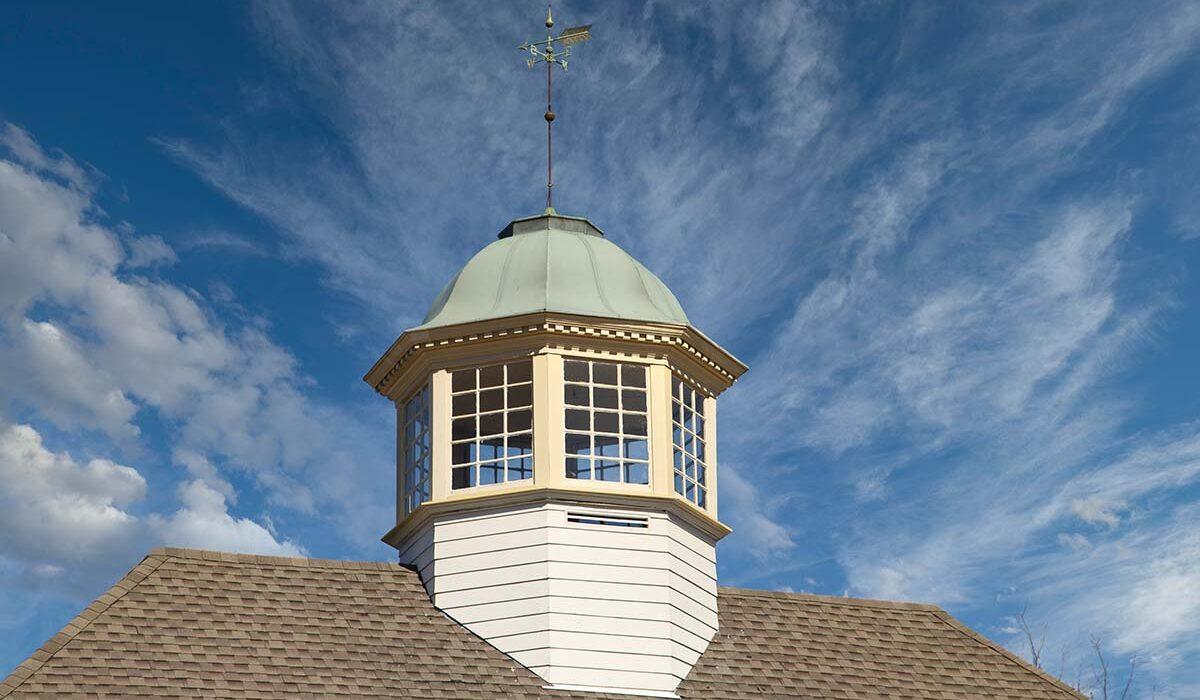
Updated July 2026. A cupola is a small, dome shaped or square structure that sits on top of a roof, originally built for ventilation and light and now loved as an architectural accent. On barns and homes alike, a cupola vents hot attic air, lets in daylight, and gives a roofline character. Here is everything homeowners ask us about them, from our roofing team in Irwin.
You’ve probably seen a cupola before—even if you didn’t know its name. Perched on rooftops of barns, homes, churches, and gazebos, a cupola is a small, dome-like structure that adds both charm and function to a building. But what exactly is it, and why do people use them? Let’s break it down.
A Quick Definition
A cupola (pronounced kyoo-puh-luh) is a small structure that sits on top of a roof. It typically features louvered sides, windows, or vents, and is often topped with a small dome or spire. While they come in many styles and materials, most cupolas serve two main purposes: ventilation and aesthetics.
The History Behind Cupolas
Cupolas have been used for centuries. Originally, they were designed to allow light and air into the upper parts of buildings—especially domed or vaulted structures. In more modern uses, cupolas are common on barns and other buildings where ventilation is important, helping release hot air, moisture, and odors from the attic or loft.
Benefits of a Cupola
1. Ventilation
Cupolas help regulate airflow, especially in barns or attics. Louvers or vented sides allow rising hot air to escape, keeping interior temperatures cooler and reducing moisture buildup.
2. Natural Light
Some cupolas feature windows or glass panels, letting natural light into a dark loft, attic, or hallway.
3. Curb Appeal
Let’s face it—cupolas look great! They add character and a classic touch to just about any roof, from traditional barns to modern garages or sheds.
4. Customization
You can choose from a variety of shapes, sizes, materials, and even add decorative features like weathervanes. Whether your home is rustic, colonial, or contemporary, there’s a cupola to match.
Where Can You Use a Cupola?
Cupolas aren’t just for barns. You’ll find them on:
-
Residential homes
-
Detached garages
-
Gazebos and pergolas
-
Churches and public buildings
-
Garden sheds or outbuildings
Should You Add One to Your Home?
If you’re looking to improve airflow, add some natural light, or just elevate the look of your roofline, a cupola might be the perfect finishing touch. They’re especially popular in rural or suburban settings where traditional architecture and function go hand-in-hand.
At Bella Construction, we help homeowners choose features that not only improve performance but also boost curb appeal. Whether you’re designing a new structure or updating an old one, ask us about custom cupolas during your roofing or siding consultation!
Interested in learning more? Contact us today for a free consultation.
Frequently Asked Questions
What is a cupola?
A cupola is a small dome shaped or square structure mounted on a roof ridge. Historically it provided ventilation and natural light for barns and homes, and today it serves as both a working vent and a decorative architectural feature.
What is the purpose of a cupola on a house?
Cupolas vent hot, moist air out of attics and barns, which protects the roof structure from condensation damage. Many modern cupolas are decorative, but a properly installed vented cupola still improves attic airflow.
Do cupolas leak?
A properly flashed and installed cupola does not leak. Most cupola leaks we repair trace back to poor installation or failed flashing where the cupola meets the ridge, which is why installation belongs with a roofing professional.
How big should a cupola be?
The rule of thumb is 1.25 to 1.5 inches of cupola width for every foot of roofline. A 40 foot roof looks right with a cupola around 50 to 60 inches wide. Undersized cupolas are the most common mistake we see.

Bella Blog
Welcome to Bella Construction & Developement Inc., where excellence meets affordability in the realm of construction services.