
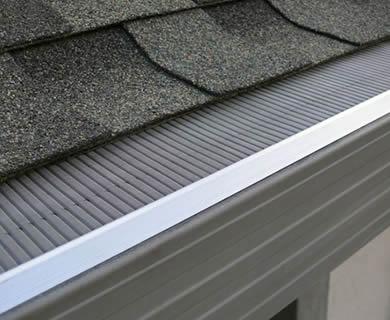
Updated July 2026. There are five main gutter guard types: micro mesh, screen, reverse curve, brush, and foam. For most Pittsburgh area homes, micro mesh guards are the best overall performer because they block pine needles and shingle grit while handling heavy rain. Here is how each type compares, and what our gutter guard installers recommend by tree situation.
If you’ve ever spent a Saturday afternoon cleaning leaves, sticks, and gunk out of your gutters, you know it’s not exactly the highlight of homeownership. That’s where gutter guards come in. They’re designed to keep debris out so your gutters can do their job—channeling rainwater safely away from your home’s foundation, siding, and roof.
But here’s the tricky part: there are several different types of gutter guards, and not all of them work equally well for every home. Let’s break down the main options and help you figure out which one’s best for you.
Types of Gutter Guards
1. Screen Gutter Guards
These are usually made of metal or plastic mesh that lays over the top of your gutters. They let water through but block larger leaves and sticks.
Pros:
-
Affordable
-
Easy to install (often DIY-friendly)
-
Good for homes with light to moderate tree coverage
Cons:
-
Smaller debris like pine needles can still get through
-
May need occasional cleaning on top of the screen
2. Mesh Gutter Guards
Think of these as the upgraded version of screen guards. They use a finer stainless steel or micro-mesh that keeps out even small debris.
Pros:
-
Keeps out pine needles, shingle grit, and smaller particles
-
Durable and long-lasting when properly installed
-
Low maintenance
Cons:
-
Higher upfront cost than screen guards
-
Professional installation recommended for best results
3. Reverse Curve (Surface Tension) Gutter Guards
These guards use the principle of surface tension. Water follows the curved guard into the gutter while leaves and debris slide off the edge.
Pros:
-
Very effective at keeping gutters virtually debris-free
-
Long-lasting when professionally installed
Cons:
-
Usually the most expensive option
-
Can be more visible from the ground
-
Might not perform as well in heavy downpours if not installed correctly
4. Foam Gutter Guards
Foam inserts fit directly into your gutters, allowing water to pass through while blocking leaves and debris on top.
Pros:
-
Easy to install
-
Budget-friendly
-
Good short-term solution
Cons:
-
Foam can deteriorate over time
-
May still trap fine debris and require replacement every few years
5. Brush Gutter Guards
These look like giant pipe cleaners—bristles sit inside the gutter, blocking debris while water flows through.
Pros:
-
Simple installation
-
Inexpensive
-
Good for temporary use
Cons:
-
Debris can get stuck in the bristles
-
Requires more frequent maintenance than other types
Which Gutter Guard Is Best for You?
It depends on your home’s surroundings and your budget:
-
Lots of tall trees, pine needles, or heavy debris? Go with micro-mesh gutter guards for the best long-term protection.
-
Looking for a low-cost, easy solution? Screens or foam guards might do the trick (just be ready for some maintenance).
-
Want a nearly maintenance-free, premium option? Reverse curve guards are worth considering, though they come with a higher price tag.
-
Minimal tree coverage? A basic screen guard could be all you need.
Protect Your Gutters—and Your Home
Clogged gutters can cause water damage, foundation issues, and costly repairs. Adding the right gutter guard can save you time, money, and a lot of ladder-climbing.
At Bella Construction, we install durable gutter systems and guards designed for Western PA’s heavy rain, snow, and falling leaves. Our experts can help you choose the right type of gutter guard for your home and install it with precision.
📞 Call us today at 724-515-5163 or visit mybellaroof.com to schedule your free estimate.
Frequently Asked Questions
What type of gutter guard works best?
Micro mesh guards perform best for most homes. They block even small debris like pine needles and shingle grit while letting heavy rain through. Screen guards are a budget alternative for homes with only large leaf debris.
Are cheap foam or brush gutter guards worth it?
Usually not for long. Foam and brush inserts clog with fine debris, can trap seeds that sprout, and often need cleaning as much as open gutters. They cost less up front but rarely hold up in our climate.
How much do gutter guards cost installed?
Quality gutter guards typically run $7 to $15 per linear foot installed in the Pittsburgh area, or roughly $1,000 to $2,500 for an average home on top of the gutters themselves.
Do gutter guards work in winter?
Good metal mesh guards handle snow and ice well and help prevent the debris dams that make gutter ice worse. No guard eliminates icicles entirely, but guards plus proper attic insulation greatly reduce ice buildup.
Still weighing the decision? We ran the numbers on whether gutter guards are worth it for a typical Pittsburgh area home, including what they cost against what repeated cleanings cost.

Bella Blog
Welcome to Bella Construction & Developement Inc., where excellence meets affordability in the realm of construction services.