
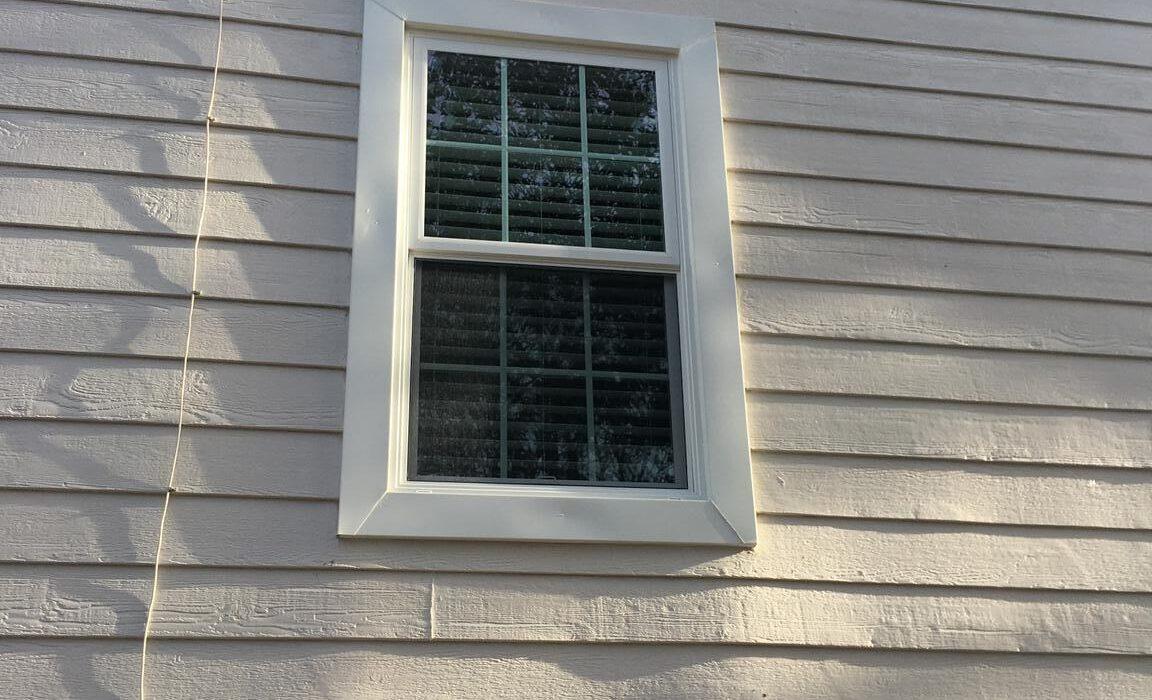
Siding warps and buckles for three main reasons: heat that makes the material expand, moisture trapped behind the wall, and installation mistakes, usually nails driven too tight to let the siding move. Vinyl siding buckling is most often a fastening or heat problem, while wood siding bulging out usually points to water getting in behind it. Some fixes are as simple as refastening a few panels, but wavy siding should always be inspected, because it can be the first visible sign of a leak you can’t see yet.
We’ve repaired a lot of rippled walls around Irwin, Greensburg, and the Pittsburgh suburbs over the past three decades, and the cause is rarely a mystery once you know what to look for. Here’s what’s really going on behind that wavy siding.
Why Siding Warps and Buckles
Heat and sun exposure. Every siding material expands when it heats up and contracts when it cools, and Western PA gives it plenty of practice, with wall surfaces swinging from below zero in January to well over 100 degrees in direct July sun. Vinyl is the most heat sensitive of the bunch. Dark panels on a southern or western exposure absorb the most heat, and one sneaky modern culprit is sunlight reflecting off a neighbor’s energy efficient windows, which can focus enough heat on a vinyl wall to melt and distort it. Grills parked too close to the house do the same thing faster.
Nailed too tight. This is the number one cause of vinyl siding buckling that we find. Vinyl is designed to hang loosely on its nails and slide side to side as temperatures change. Manufacturers call for leaving a small gap between the nail head and the nailing hem. When an installer drives every nail snug, the panel has nowhere to go on a hot day, so it oil cans and ripples instead. If your siding went wavy within the first year or two, poor fastening is the prime suspect.
Trapped moisture. Wood and engineered wood siding swell when they absorb water. When you see wood siding bulging out, cupping, or pushing its nails, water is almost always getting behind it, from a roof leak, a missing kickout flashing where the roof meets a wall, failed caulk around a window, or gutters dumping water down the siding. Our freeze and thaw winters make it worse, because trapped water expands as ice and pries materials apart.
Structural movement and bad substrate. Sometimes the siding is just telling on the wall behind it. Sheathing that got wet before the siding went on, uneven furring, or settling framing can all show up as waves in the finished surface.
Low quality material. Thin builder grade vinyl warps at temperatures that heavier panels shrug off. If your home was sided with the cheapest product available 20 years ago, some distortion may simply be the material aging out.
Signs Your Siding Needs Attention
Walk your house a couple of times a year, ideally on a warm afternoon when expansion is at its peak, and sight down each wall from the corner. Look for visible waves or ripples, panels that have unlocked from each other, gaps opening at seams or around windows, siding pulling away from the wall, and any soft, discolored, or moldy spots. Peeling paint on wood siding and a musty smell in nearby rooms are moisture red flags.
Two less obvious signs: rising heating and cooling bills, since gaps and distortion let air and water past your home’s outer defense, and pest activity, because mice and insects treat every new gap as an open door.
Can Warped Siding Be Fixed, or Does It Need Replaced?
It depends on the cause, and that’s exactly why a proper inspection matters more than the repair itself.
When repair makes sense. A few buckled vinyl panels caused by tight nailing can be unlocked, refastened correctly with room to move, and snapped back in place. Isolated heat damage from a grill or window reflection can be fixed by replacing the affected panels and removing the heat source. One of vinyl and lap siding’s genuine advantages is that individual pieces can be swapped without redoing the wall.
When replacement is the smarter call. If moisture has been getting behind the siding for a while, the damage usually extends to the housewrap and sheathing, and patching over wet wood just buries the problem. Likewise, if warping shows up across multiple walls of an older installation, chasing it panel by panel becomes throwing good money after bad. Full replacement lets us fix the water management underneath, add proper flashing, and start fresh with a material suited to our climate. If you’re weighing that decision, our guide to siding cost in Pittsburgh lays out what different materials run in our area.
How to Prevent Warping and Buckling
Prevention comes down to three things. First, correct installation: fasteners centered in the slots and left loose enough for movement, proper overlaps, and expansion gaps at trim, all per the manufacturer’s specs. This is where hiring an experienced siding contractor pays for itself, because most buckling we repair traces straight back to the original install. Second, manage water: keep gutters clean, maintain caulk around windows and doors, and make sure kickout flashing exists where rooflines meet walls. Third, manage heat: keep grills and fire pits several feet off the house and be aware of reflected sun on vinyl walls.
Material choice is prevention too. Fiber cement barely moves with temperature and doesn’t melt, heavier gauge vinyl resists distortion far better than bargain panels, and modern engineered wood handles moisture better than the products of 20 years ago. We compare how each one holds up to our winters in our guide to the best siding for Pittsburgh weather.
Frequently Asked Questions
Why is my siding wavy all of a sudden?
Sudden waviness on a hot day usually means the siding was fastened too tightly and can’t expand, or something is concentrating heat on that wall, like reflection from a nearby window. If it appeared gradually and the wall faces the weather, suspect moisture behind the siding.
Can buckled vinyl siding be fixed without replacing it?
Often, yes. If the panels aren’t creased or melted, we can unlock them, refasten them with proper clearance, and relock them. Panels that are distorted, cracked, or heat damaged need to be replaced, but usually only those individual pieces.
Why is my wood siding bulging out?
Bulging wood siding almost always means the boards are absorbing water, either from behind due to a leak or failed flashing, or because the finish has worn away. Find and fix the water source first; otherwise new boards will bulge the same way.
Does homeowners insurance cover warped siding?
Generally not for gradual warping, which insurers treat as wear or a maintenance issue. Sudden damage from a covered event like a storm is a different story. We inspect storm damaged siding regularly and can tell you honestly which category yours falls into.
Get Eyes on It Before It Gets Worse
Wavy siding is one of those problems that never fixes itself, and the gap between a simple refastening and a rotted wall is usually just time. We’re a family company out of Irwin and we’ve been straightening out Western PA exteriors since 1995. Schedule your free inspection at mybellaroof.com and we’ll tell you exactly what’s causing it and what it’ll take to fix.

Bella Blog
Welcome to Bella Construction & Developement Inc., where excellence meets affordability in the realm of construction services.