
- By Bella Blog
- Windows
- 0 Comment
Discover how modern energy efficient windows transform your home’s comfort through advanced thermal technology, reducing drafts, noise, and energy costs while maintaining consistent indoor temperatures year round.
Understanding how do energy efficient windows work helps homeowners see why modern window technology plays a major role in improving indoor comfort while lowering heating and cooling expenses.
How Do Energy Efficient Windows Work To Reduce Heat Loss And Improve Efficiency
At the heart of energy efficient window performance lies a fundamental understanding of thermal physics and how heat moves through building materials. Traditional single pane windows act as weak points in your home’s thermal envelope, allowing heat to escape during winter and infiltrate during summer through three primary mechanisms: conduction, convection, and radiation.
Modern energy efficient windows are specifically engineered to minimize these heat transfer pathways. This creates a more stable and comfortable indoor environment while significantly reducing the burden on your heating and cooling systems.
For a deeper explanation of how do energy efficient windows work and their full benefits, explore our guide on Energy Efficient Windows: How They Can Save You Money and Improve Comfort.
The thermal performance of windows is measured using the U factor, which indicates how well a window prevents heat from escaping. Lower U factors represent better insulating properties. While older single pane windows typically have U factors between 0.90 and 1.20, today’s high performance double or triple pane windows can achieve U factors as low as 0.20 to 0.30.
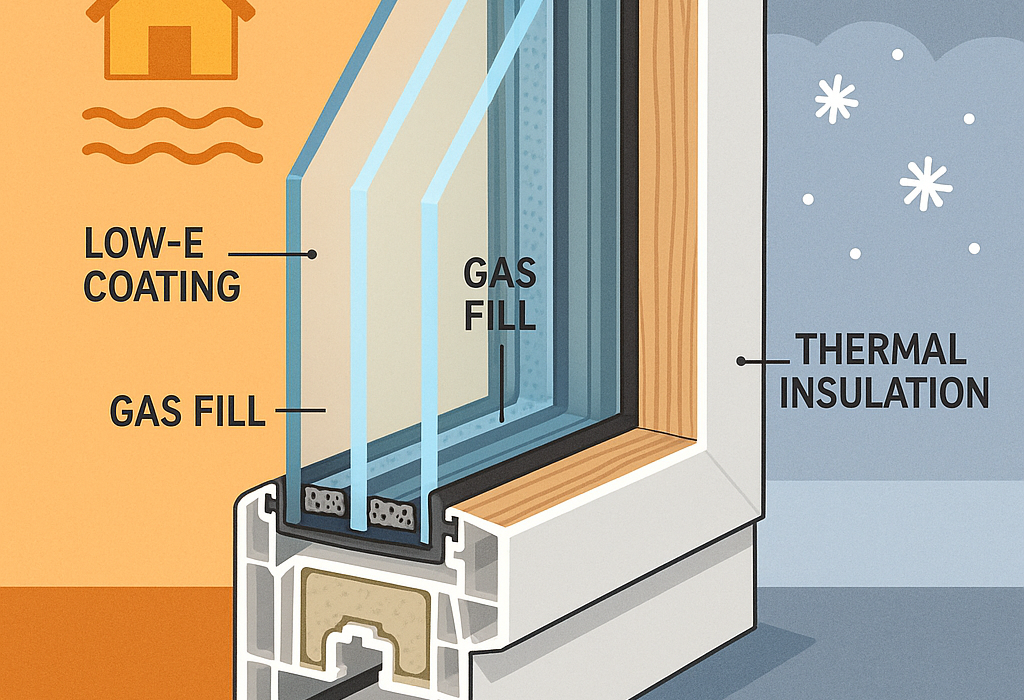
This dramatic improvement is accomplished through multiple insulating glass panes separated by spacer systems that create insulating air spaces. These spaces interrupt the direct conduction pathway that allows thermal energy to pass through the window assembly.
To learn more about innovations in modern window technology, read our article on The Latest Trends in Windows for 2025.
Another critical metric is the Solar Heat Gain Coefficient or SHGC, which measures how much solar radiation passes through a window and becomes heat inside your home. In Western Pennsylvania’s climate, selecting windows with the appropriate SHGC helps balance winter solar heat gain which can reduce heating costs with summer heat rejection to maintain comfort during warmer months.
Professional window replacement considers these performance ratings alongside your home’s orientation, local climate conditions, and specific comfort goals to optimize year round thermal performance.
How Heat Transfer Through Windows Affects Indoor Comfort And Energy Bills
The impact of heat transfer through windows extends far beyond simple temperature measurements. It directly affects the perceived comfort of occupants and drives significant portions of residential energy consumption.
When windows have poor thermal performance, they create cold surfaces during winter that radiate coldness toward occupants. Rooms may feel uncomfortable even when the thermostat indicates a reasonable temperature. This phenomenon known as radiant heat loss causes homeowners to increase thermostat settings to compensate, driving up heating costs while still experiencing cold drafts near windows.
Similarly during summer months inefficient windows allow solar heat gain and conduction to warm interior spaces. This forces air conditioning systems to work harder and run longer.
If you are experiencing these issues, it might be time to consider an upgrade. Learn more about 5 Signs Your Windows Need Replacing to determine if your home could benefit from new energy efficient windows.
The United States Department of Energy estimates that heat gain and loss through windows accounts for 25 to 30 percent of residential heating and cooling energy use. For a typical Western Pennsylvania home this translates to hundreds of dollars in annual energy costs that could be reduced through window replacement.
When cold exterior temperatures meet warm interior air at a poorly insulated window, condensation forms on the glass surface. This can lead to moisture damage, mold growth, and deterioration of window frames and surrounding wall structures.
Energy efficient windows with improved insulation properties maintain warmer interior glass surface temperatures. This greatly reduces condensation and the related maintenance concerns.
To better understand how efficient windows impact your home and energy costs, read Energy Efficiency 101: How New Windows Can Save You Money.
Beyond measurable energy savings, upgraded windows eliminate uncomfortable temperature differences that occur with inefficient glazing. Rooms with modern energy efficient windows maintain more uniform temperatures from floor to ceiling and from exterior walls to interior spaces. The result is a more comfortable living environment that feels consistently pleasant throughout the home.
The Role Of Low E Coatings And Gas Fills In Temperature Regulation
Low emissivity coatings or Low E coatings represent one of the most significant technological advances in window performance over the past three decades. These microscopically thin metallic or metallic oxide layers are applied to glass surfaces and are virtually invisible to the naked eye.
Despite their thin structure they dramatically change how windows interact with different wavelengths of energy.
Low E coatings work by reflecting infrared energy which is the wavelength associated with heat while allowing visible light to pass through. During winter Low E coatings reflect interior heat back into your home rather than allowing it to radiate outward through the glass.
In summer these coatings reflect exterior solar heat away from your home while still allowing natural daylight to enter.
For a deeper look into the benefits of advanced window technology explore Discover the Benefits of Vinyl Windows for Your Energy Bills, which highlights how modern materials and coatings influence home efficiency.
The formulation and placement of Low E coatings can be optimized for different climate zones and performance priorities. Passive Low E coatings maximize solar heat gain which makes them suitable for heating dominated climates like Pittsburgh where winter solar gain helps offset heating costs.
Active Low E coatings minimize solar heat gain and perform better during cooling seasons.
Professional window installation companies evaluate your home’s orientation, shading conditions, and climate patterns to recommend the best coating option for year round performance.
Complementing Low E coatings are insulating gas fills placed between window panes. Argon and krypton gases are denser than air and reduce convective heat transfer inside the glass unit.
Argon gas which is the most common fill improves insulation by approximately 30 percent compared to air filled units. Krypton gas offers even better insulation and is especially effective in triple pane window assemblies with narrower gaps.
These gas fills remain stable inside properly sealed insulating glass units for decades. When professionally installed with proper sealing systems gas filled windows maintain their thermal performance and provide consistent comfort improvements over the life of the window.
To explore different window materials and designs read Vinyl Vs Wood Vs Composite Windows: Which Is Best For Your Home.
Additional Benefits Of Energy Efficient Windows Such As Noise Reduction And UV Protection
While thermal performance often drives window replacement decisions, modern energy efficient windows provide additional benefits that significantly improve home comfort and protection.
Sound transmission through windows can be a major concern for homes near busy streets, commercial areas, or flight paths. The multi pane construction and insulating gas fills used in modern windows create effective barriers against outside noise.
Insulating glass unit designs interrupt sound wave transmission. Different glass thicknesses and air spaces absorb and dampen acoustic energy before it enters indoor living spaces.
Many homeowners report that one of the most noticeable improvements after installing energy efficient windows is the dramatic reduction in exterior noise.
Premium window options also offer laminated glass that includes a polymer interlayer between panes. This construction further reduces sound vibrations and improves acoustic performance.
Combined with proper installation techniques that eliminate gaps around the window frame, laminated glass windows can reduce exterior noise levels by 30 to 40 decibels or more.
Another important advantage is ultraviolet radiation protection. UV rays can penetrate standard glass and cause fading and deterioration of flooring, furniture, window coverings, and artwork.
Low E coatings block up to 99 percent of harmful UV radiation while still allowing natural daylight to enter the home.
This protection helps preserve interior furnishings and materials by reducing sun damage over time. For homeowners with hardwood flooring, carpeting, or valuable furniture this protection adds significant long term value.
Energy efficient windows also contribute to healthier indoor environments by reducing long term UV exposure inside living spaces.
Real World Results Homeowners Experience After Installing Energy Efficient Windows
Understanding how do energy efficient windows work becomes even clearer after homeowners experience the real world improvements following window replacement.
One of the first noticeable changes is the elimination of cold drafts near windows during winter and reduced heat buildup near windows during summer. Rooms that were previously uncomfortable become usable living spaces throughout the year.
Many homeowners report that rooms feel warmer during winter without raising thermostat settings. Air conditioning systems also maintain more consistent cooling during summer heat waves without running constantly.
If you are considering new windows you may also want to review What to Expect From Window Replacement Costs in 2026 to understand potential investment ranges.
Energy bill reductions are the most measurable benefit of installing energy efficient windows. Actual savings vary depending on the condition of old windows, home size, energy costs, and household energy use patterns.
In Western Pennsylvania many homeowners report heating and cooling cost reductions of 15 to 30 percent after installing modern window systems.
Reduced strain on HVAC systems is another benefit. With better insulation heating and cooling equipment cycles less frequently which can extend system lifespan and reduce maintenance needs.
To see how new windows can enhance both comfort and property value read Transforming Homes: American Homeowners Embrace Window Replacement.
High quality energy efficient windows from trusted manufacturers are designed to maintain performance for 20 to 30 years or more with minimal maintenance.
Modern frame materials such as vinyl and fiberglass resist moisture damage and do not rot, warp, or require painting. Homeowners also benefit from improved functionality including smooth operation, easy cleaning tilt in sashes, and durable hardware.
When professionally installed by experienced contractors energy efficient windows deliver lasting improvements in comfort, energy savings, and long term property value.
For a deeper look at return on investment read Do New Windows Increase Home Value.
Contact Information
Location:
- 10561 Center Hwy, Irwin, PA 15642, USA
E-mail:
- info@mybellaroof.com
Phone:
- 724-515-5163
With Bella, you’ll get energy efficiency improvements, reduced energy waste, and a home that’s safer, more comfortable, and more beautiful.
Thinking about your next project?

Bella Blog
Welcome to Bella Construction & Developement Inc., where excellence meets affordability in the realm of construction services.