
- By Bella Blog
- Siding
- 0 Comment
When winter descends on Western Pennsylvania even small gap siding issues can lead to big problems for your home’s comfort energy efficiency and long term protection. Understanding how gap siding behaves during cold weather helps homeowners prevent heat loss moisture damage and costly repairs.
What is gap siding and why does it become a problem in winter
Gap siding refers to small openings seams or separations between siding panels trim or joints. These gaps often form due to normal expansion and contraction installation errors aging materials or shifting structures. During winter these small openings become larger risks because cold temperatures moisture and wind amplify their impact.
Western Pennsylvania winters bring freeze thaw cycles snow buildup and strong winds. As siding materials contract in cold weather existing gap siding areas can widen allowing cold air and moisture to move behind the exterior walls. Once winter conditions set in these gaps no longer stay minor they become direct pathways for drafts water intrusion and insulation failure.
How winter weather exposes gap siding vulnerabilities
Cold weather places constant stress on siding systems. As temperatures fluctuate materials expand during mild days and contract overnight. This repeated movement can worsen gap siding especially when expansion allowances were not properly considered during installation.
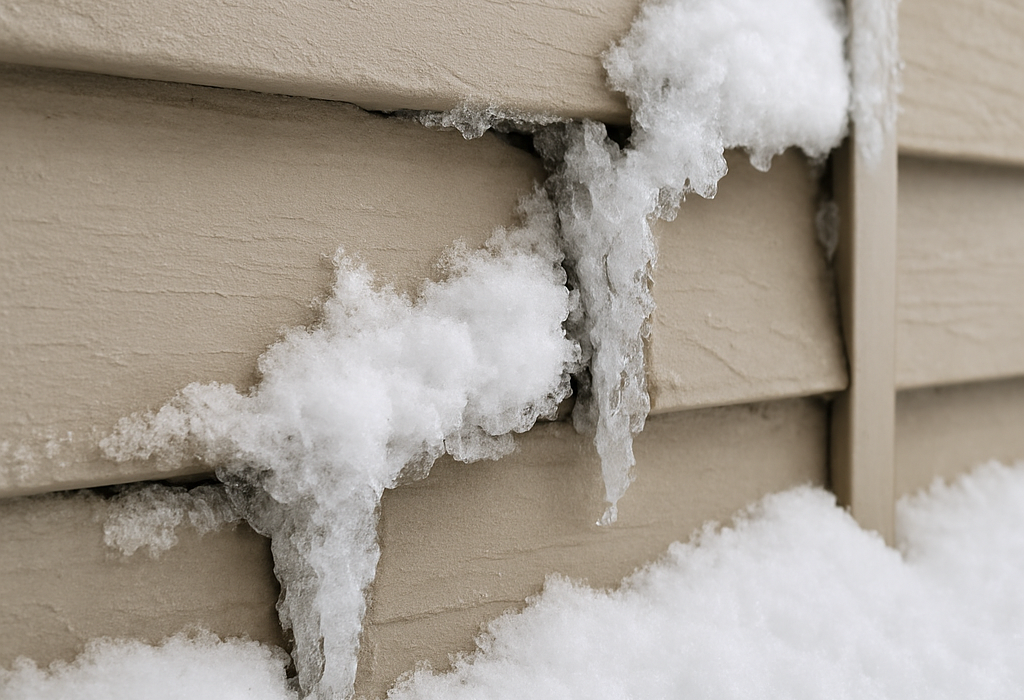
Snow and ice accumulation add another layer of risk. Melting snow can be pushed into gap siding by wind driven precipitation. When temperatures drop again trapped moisture freezes expands and further enlarges gaps. Over time this cycle weakens the siding system and the wall assembly beneath it.
How gap siding impacts energy efficiency and indoor comfort
Gap siding significantly reduces energy efficiency during winter months. These openings allow cold air to infiltrate the home while warm indoor air escapes. As a result heating systems run longer and harder increasing energy costs and creating uncomfortable cold spots inside the house. For more information on how to address drafts in your home, check out our guide on why you can feel a draft in your house during winter and how to fix it.
Properly sealed siding paired with quality insulation and exterior house wrap forms a continuous thermal barrier. Eliminating gap siding helps stabilize indoor temperatures reduce drafts and support consistent heating performance throughout the winter season.
Why gap siding leads to moisture intrusion and structural damage
Moisture intrusion is one of the most serious risks associated with gap siding in winter. Snow and ice that melt during the day can seep behind siding panels through gaps and seams. Once moisture enters the wall system it can soak insulation promote mold growth and cause wood rot. If you’re concerned about moisture issues, learn more about the signs of trapped moisture under shingles you shouldn’t ignore.
Over time unresolved moisture problems weaken framing materials degrade insulation effectiveness and damage interior finishes. In climates like Western Pennsylvania preventing moisture from entering through gap siding is essential for preserving structural integrity and avoiding long term repair costs.
How to inspect and fix gap siding before winter damage occurs
Inspecting for gap siding before winter arrives is a critical preventive step. Homeowners should look for visible gaps loose or shifting panels cracked caulking and separation around windows doors and corner trim. These areas are the most common entry points for air and moisture. For more information on siding issues, read our article on warping and buckling of siding.
Addressing gap siding early may involve resealing joints with cold weather rated caulk replacing damaged panels or correcting improper fastener placement. In some cases upgrading to insulated siding or improving the weather barrier beneath the siding provides added protection. Using materials designed for cold climates ensures better performance during winter conditions.
Why professional siding installation and maintenance matters most
Professional installation plays a major role in preventing gap siding issues. Experienced contractors such as Bella Construction & Development Inc. understand how to allow for thermal movement install proper moisture barriers and maintain consistent panel alignment. These details are especially important in regions with harsh winter cycles. To learn more about the importance of professional installation, check out our article on the benefits of professional siding installation.
Ongoing professional maintenance ensures that gap siding problems are identified and corrected before winter exposure causes extensive damage. Seasonal inspections timely repairs and system upgrades help protect your home’s comfort energy efficiency and overall value year round.
Contact Information
Location:
- 10561 Center Hwy, Irwin, PA 15642, USA
E-mail:
- info@mybellaroof.com
Phone:
- 724-515-5163
With Bella, you’ll get energy efficiency improvements, reduced energy waste, and a home that’s safer, more comfortable, and more beautiful.
Thinking about your next project?

Bella Blog
Welcome to Bella Construction & Developement Inc., where excellence meets affordability in the realm of construction services.