
- By Bella Blog
- Windows
- 0 Comment
Condensation Vs. Leak issues on windows can look similar at first glance, but understanding the difference is essential for protecting your home, maintaining indoor air quality, and avoiding expensive repairs. Moisture on or around your windows is never something to ignore—identifying the source early helps you choose the right solution.
Condensation Vs. Leak: How to Tell the Difference
When moisture appears on your window, the first step is determining whether you’re dealing with condensation vs. leak problems.
Signs of Window Condensation
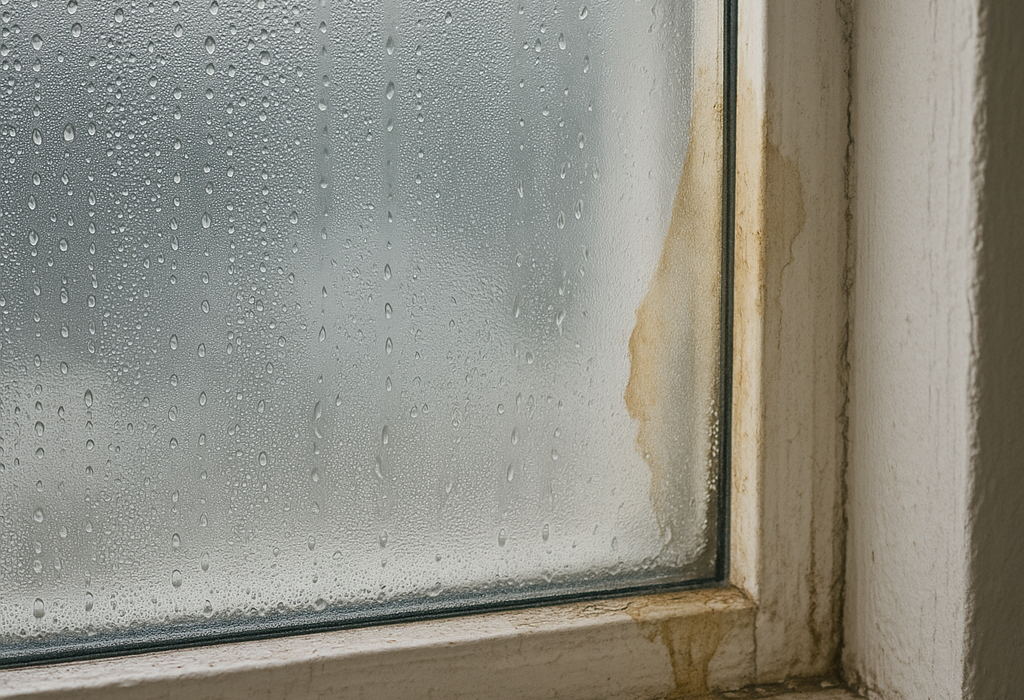
Condensation forms when warm, humid indoor air meets a cooler window surface. It usually appears as fogging or small water droplets on the inside of the glass and is often more noticeable in the morning or during colder weather. This type of moisture is typically spread evenly across the glass and is common in high-humidity areas like kitchens, bathrooms, and bedrooms. To learn more about why your windows might be fogging up, check out our article on Why Do My Windows Fog Up? Causes of Indoor Condensation.
Signs of a Window Leak
A leak, on the other hand, is caused by water entering from outside. Leaks often show up as localized water stains, dripping, damp drywall, or moisture around the window frame or sill. You may also notice peeling paint, warped wood, or musty odors, which are strong indicators of water intrusion. These issues could be signs of window seal failure, which can lead to more serious problems if left unaddressed. Examining the pattern and location of moisture can help you determine the underlying cause and guide your next steps.
Why Condensation Vs. Leak Problems Shouldn’t Be Ignored
Ignoring condensation vs. leak issues can put both your property and your health at risk.
Unaddressed moisture from leaks or persistent condensation can cause significant damage to your property. Structural risks include wood rot, mold growth, insulation breakdown, and deterioration of window frames and drywall. Over time, these issues compromise the integrity of your building envelope and may lead to costly repairs. For more information on how moisture can affect your home, particularly your roof, read our article on Signs of Trapped Moisture Under Shingles You Shouldn’t Ignore.
Beyond structural damage, excess moisture creates an environment conducive to mold and mildew growth. Mold spores can impact indoor air quality, potentially triggering respiratory problems, allergies, or other health concerns for occupants. Early identification and correction are essential to safeguard both your building and its inhabitants.
What Causes Condensation Vs. Leak Issues on Windows?
Common Causes of Window Condensation
Condensation is primarily caused by excess indoor humidity combined with cold window surfaces. Poor ventilation, inadequate insulation, and older single-pane windows all increase the likelihood of condensation forming. Homes with tightly sealed envelopes but insufficient airflow are especially prone to this issue.
Common Causes of Window Leaks
Leaks are usually the result of exterior failures. These include damaged or missing caulking, failed window seals, improper flashing, aging siding, or roofing problems above the window. Water follows gravity, so issues higher up on the exterior often show up around windows first. For more information on how these issues can affect your home, read our article on Flashing Problems to understand the importance of proper installation and maintenance.
Condensation Vs. Leak Solutions: How to Prevent and Fix Moisture Issues
Addressing condensation vs. leak problems requires different approaches depending on the source.
How to Reduce Window Condensation
Improve indoor ventilation with exhaust fans or a whole-home ventilation system
Use dehumidifiers to control indoor humidity levels
Upgrade to energy-efficient double- or triple-pane windows
Improve wall and attic insulation to reduce cold surfaces
To learn more about preparing your windows for challenging weather conditions, check out our guide on How to Seal Windows for Winter: A Step-by-Step Guide.
How to Prevent Window Leaks
Install proper construction-grade flashing around windows
Replace deteriorated caulking and weather seals
Inspect siding, roofing, and gutters regularly
Repair damage promptly using code-compliant materials
Preventive maintenance and professional installation are key to keeping water out.
When to Call a Professional for Condensation Vs. Leak Problems
While minor condensation can often be managed with better ventilation, persistent moisture or visible water damage is a sign that professional help is needed. A licensed contractor can accurately diagnose whether the issue is condensation vs. leak-related and recommend durable, long-term solutions.
Working with an experienced exterior specialist like Bella Construction & Development Inc. ensures your windows, siding, and roofing systems are properly evaluated and repaired. With decades of experience serving Pittsburgh and Western Pennsylvania, their team delivers construction-grade solutions that protect your property and restore peace of mind. To learn more about why choosing a trusted local contractor is important, read our article on Why You Should Hire a Trusted Roofing and Siding Contractor in Pittsburgh.
Contact Information
Location:
- 10561 Center Hwy, Irwin, PA 15642, USA
E-mail:
- info@mybellaroof.com
Phone:
- 724-515-5163
With Bella, you’ll get energy efficiency improvements, reduced energy waste, and a home that’s safer, more comfortable, and more beautiful.
Thinking about your next project?

Bella Blog
Welcome to Bella Construction & Developement Inc., where excellence meets affordability in the realm of construction services.